Earth's Systems (Grade 5): The Four Spheres and How They Work Together
Science · Grade 5 Earth science: the geosphere, hydrosphere, atmosphere and biosphere, what each is made of, how the spheres interact (erosion, gas exchange, the water cycle, volcanoes, forest fires) and how people affect them.
Why this topic matters
Where does every ecosystem get its water, air and soil? Think of Earth as a sports team with four players. Each player has a job, and they pass things back and forth all the time. Scientists call these players Earth's four spheres.
Meet the four spheres
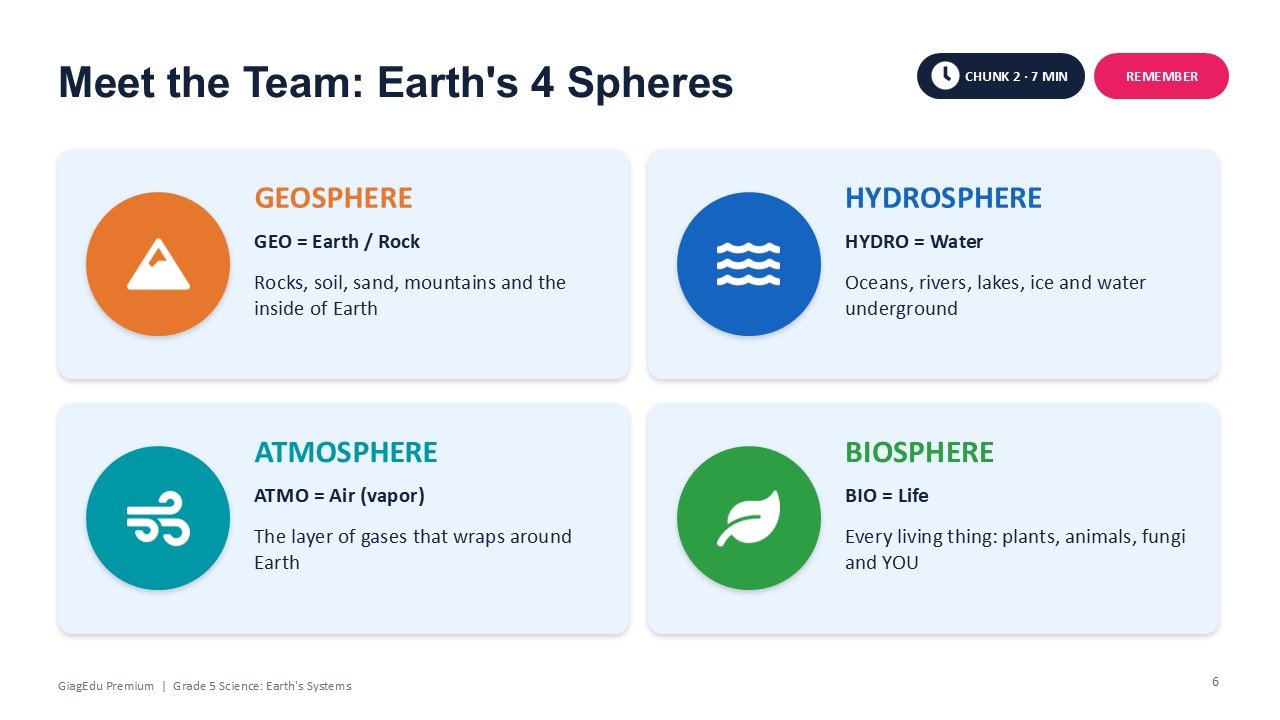
- Geosphere (geo = Earth, rock): rocks, soil, sand, mountains and the inside of Earth.
- Hydrosphere (hydro = water): oceans, rivers, lakes, ice and water underground.
- Atmosphere (atmo = air, vapour): the layer of gases that wraps around Earth.
- Biosphere (bio = life): every living thing: plants, animals, fungi, bacteria and you.
The geosphere: rock and land
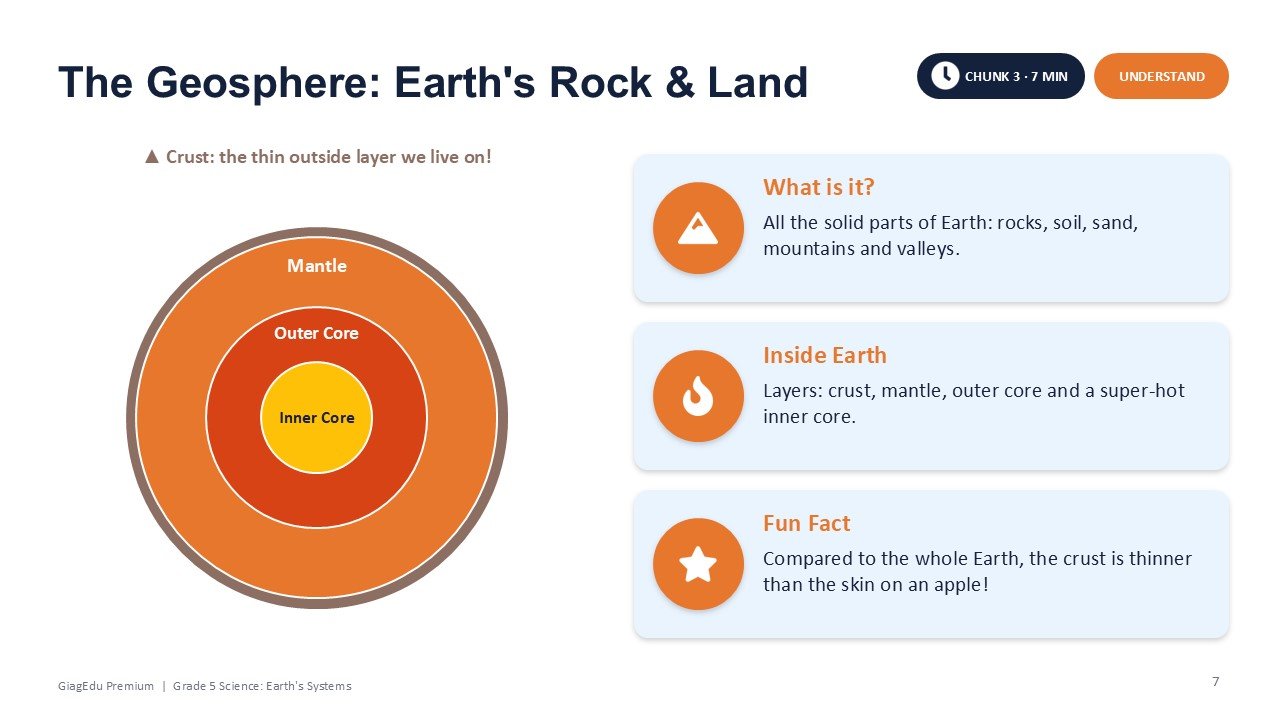
The geosphere is all the solid parts of Earth. Inside, Earth has layers: the crust (the thin outside layer we live on), the mantle, the outer core and a very hot inner core. Compared to the whole Earth, the crust is thinner than the skin on an apple.
The hydrosphere: all of Earth's water
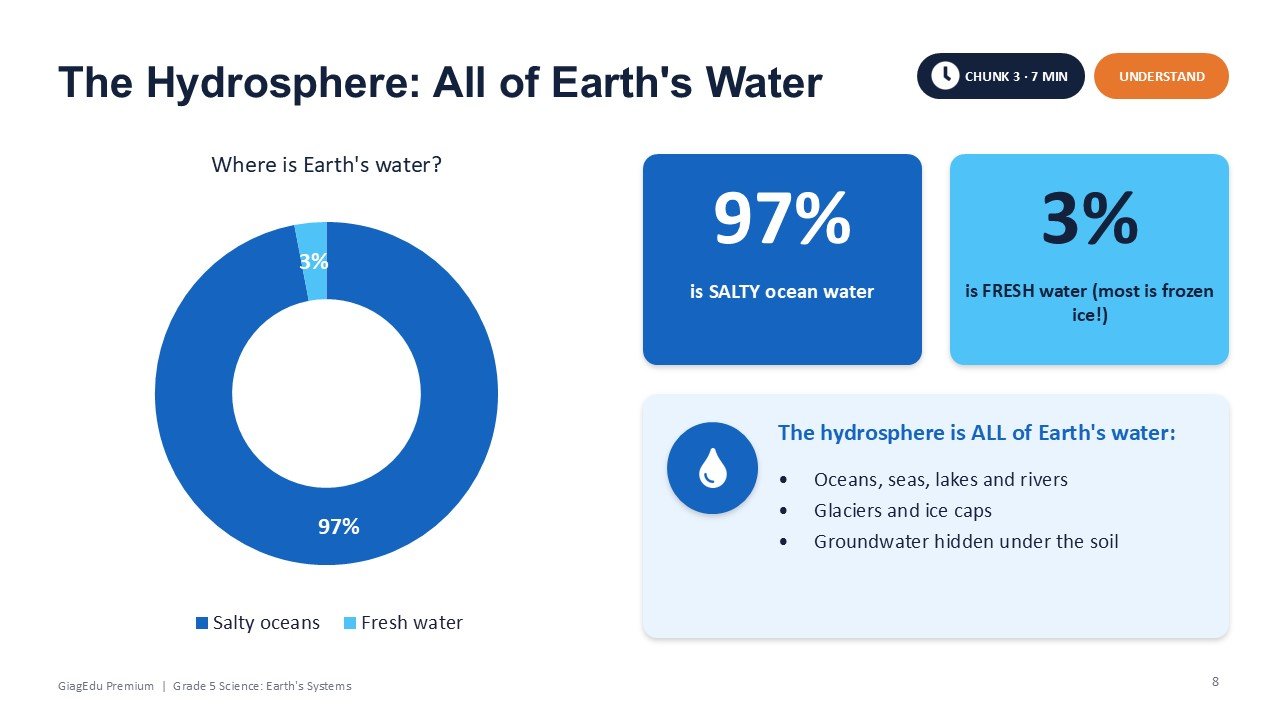
About 97% of Earth's water is salty ocean water. Only about 3% is fresh water, and most of that is frozen in ice caps and glaciers. The hydrosphere includes oceans, seas, lakes, rivers, glaciers and groundwater hidden under the soil.
The atmosphere: Earth's blanket of air
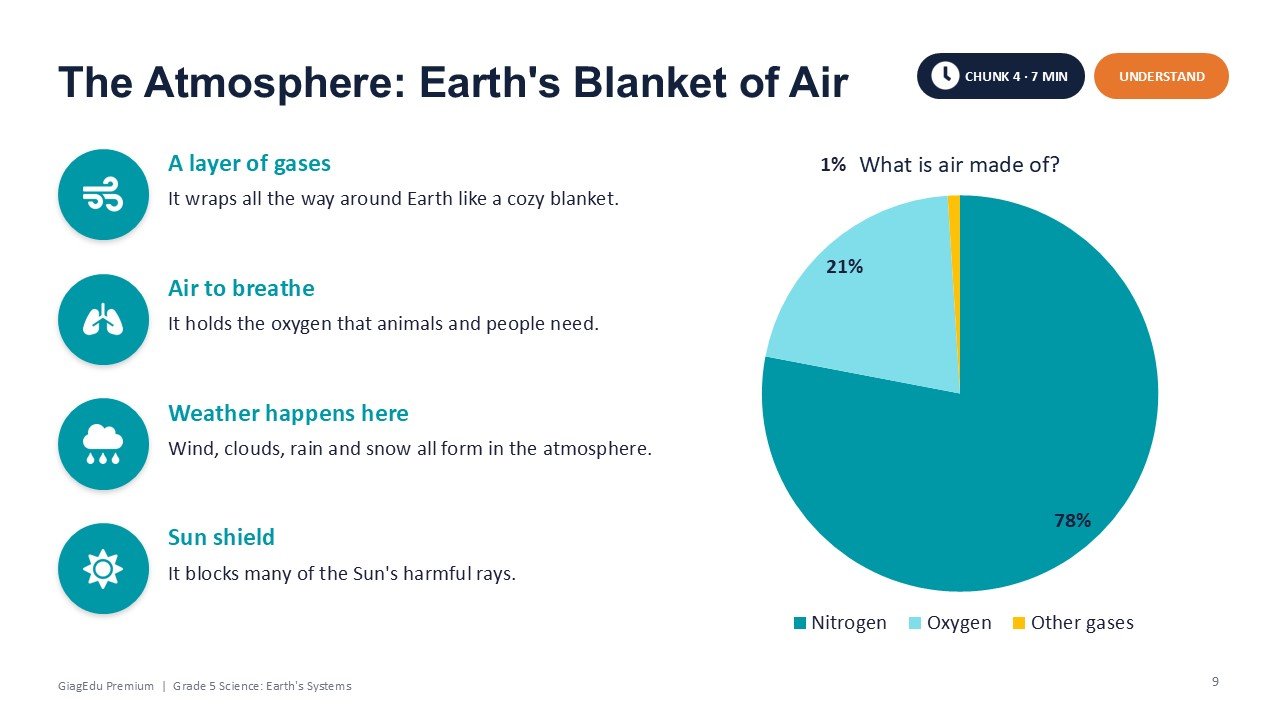
- It is a layer of gases that wraps all the way around Earth.
- Air is about 78% nitrogen, 21% oxygen and 1% other gases, so nitrogen is the most common gas.
- It holds the oxygen that people and animals breathe.
- Weather happens here: wind, clouds, rain and snow.
- It blocks many of the Sun's harmful rays.
The biosphere: every living thing
The biosphere is all living things on Earth: plants, fish, birds, insects, fungi (such as mushrooms), tiny bacteria and people. Life is found almost everywhere, from the deep ocean floor to icy mountain tops. Every ecosystem lives inside the biosphere.
The spheres work as a team
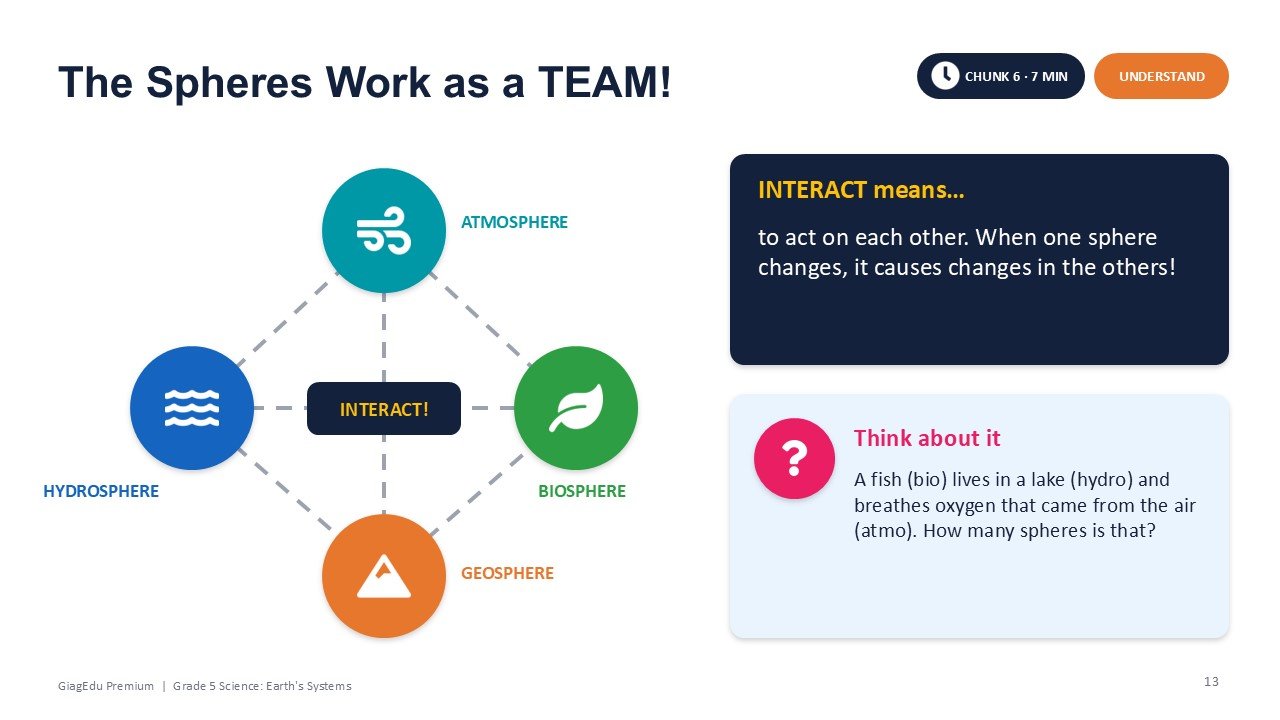
To interact means to act on each other: when one sphere changes, it causes changes in the others. A fish (biosphere) lives in a lake (hydrosphere) and uses oxygen that came from the air (atmosphere): three spheres at once.
Example 1: water shapes the land
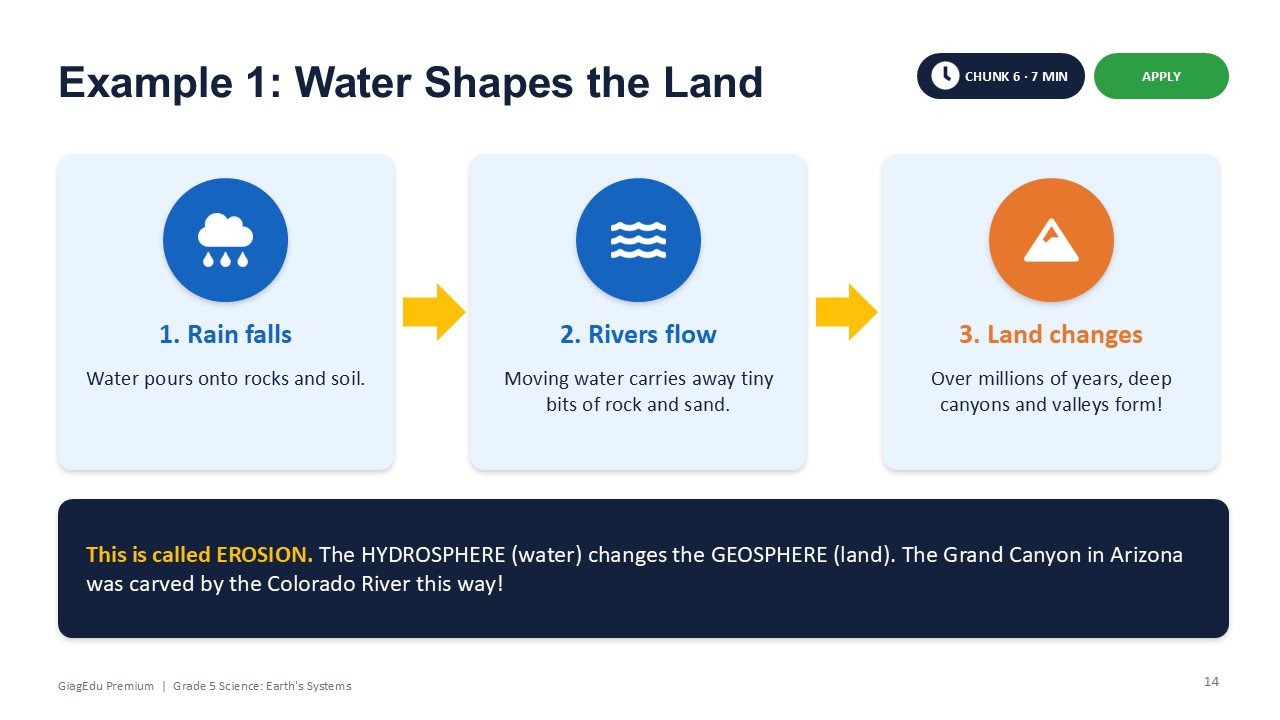
Rain falls on rocks and soil; rivers carry away tiny bits of rock and sand; over millions of years deep canyons and valleys form. This is erosion: the hydrosphere changes the geosphere. The Grand Canyon in the USA was carved by the Colorado River this way.
Example 2: plants and air trade gases
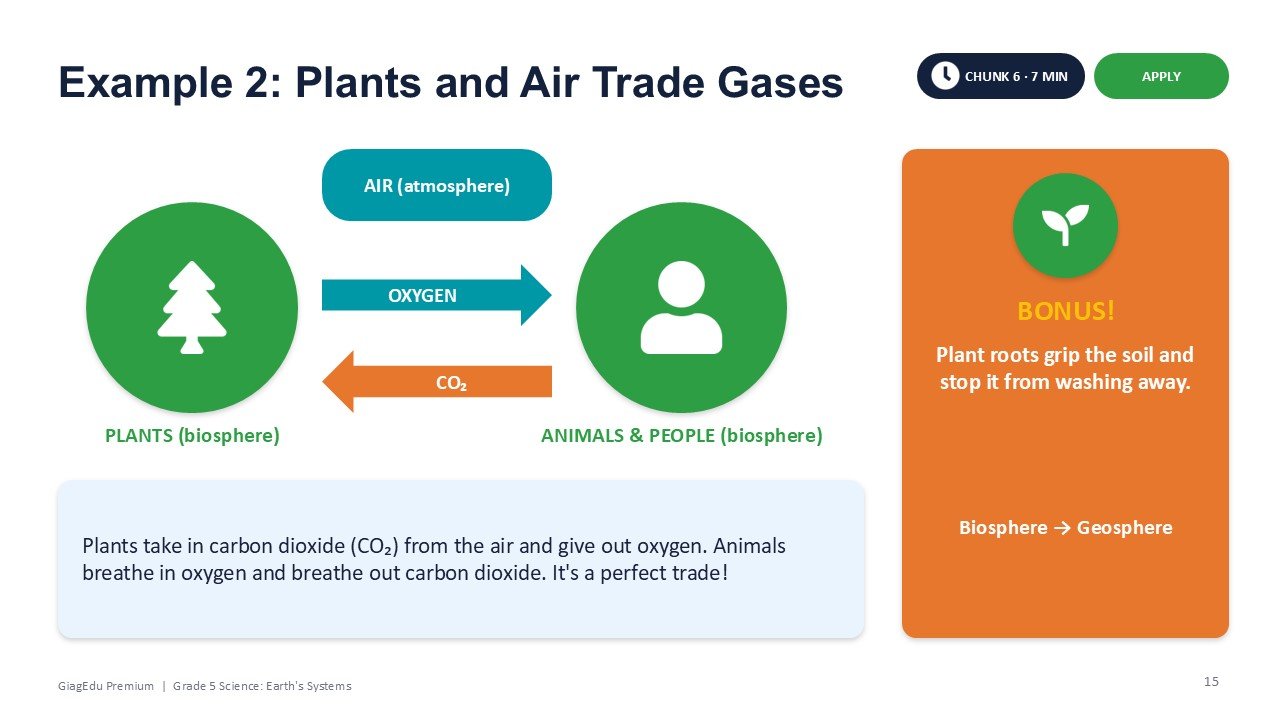
Plants take in carbon dioxide from the air and give out oxygen. Animals and people breathe in oxygen and breathe out carbon dioxide. That is the biosphere and atmosphere trading gases. Bonus: plant roots grip the soil and stop it washing away (biosphere → geosphere).
The water cycle connects all four
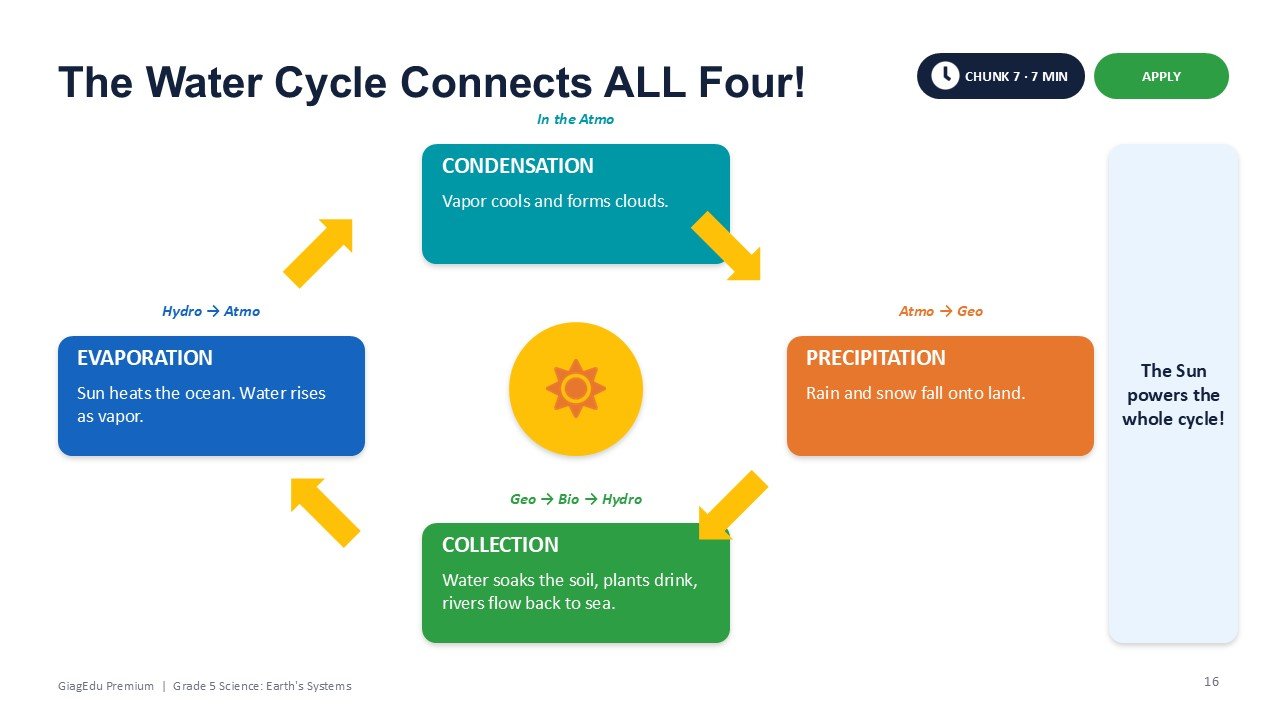
- Evaporation: the Sun heats the ocean and water rises as vapour (hydrosphere → atmosphere).
- Condensation: the vapour cools and forms clouds (in the atmosphere).
- Precipitation: rain and snow fall onto land (atmosphere → geosphere).
- Collection: water soaks into soil, plants drink it, and rivers carry it back to the sea (geosphere → biosphere → hydrosphere).
The Sun powers the whole cycle.
Case study: a volcano erupts
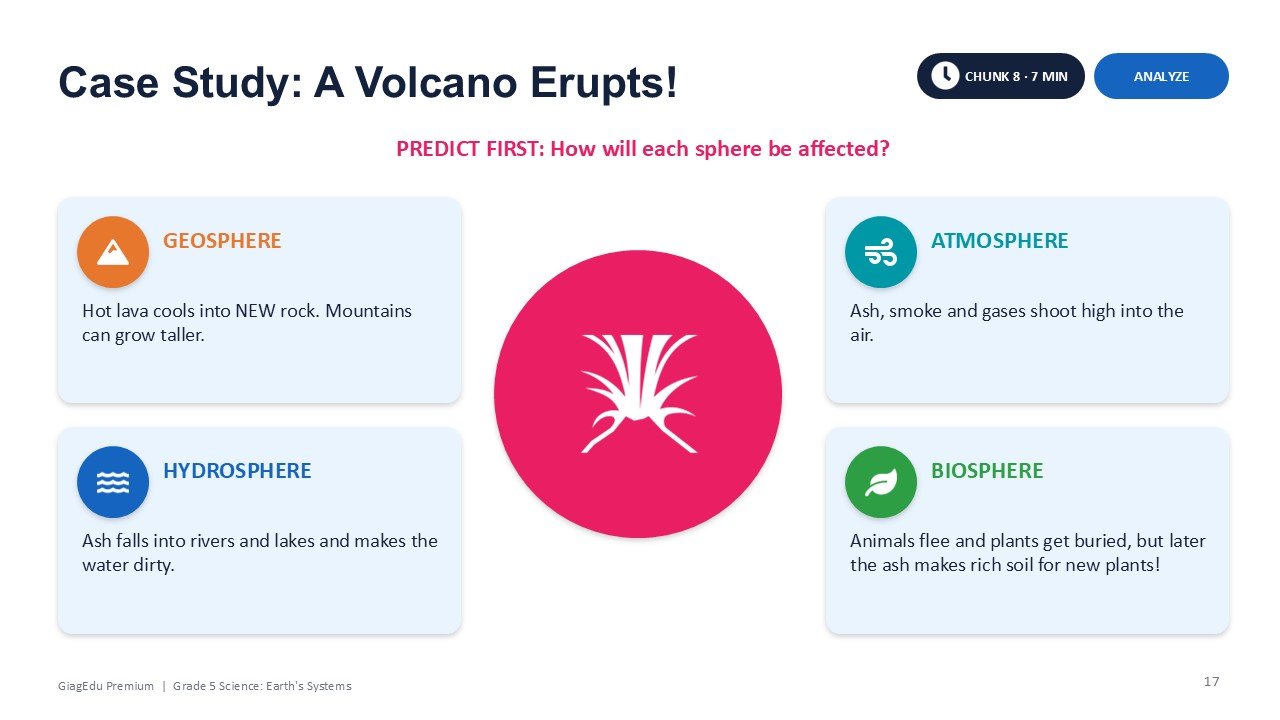
- Geosphere: hot lava cools into new rock; mountains can grow taller.
- Atmosphere: ash, smoke and gases shoot high into the air.
- Hydrosphere: ash falls into rivers and lakes and makes the water dirty.
- Biosphere: animals flee and plants are buried, but later the ash makes rich soil for new plants.
So one event affects all four spheres.
The domino effect: a forest fire
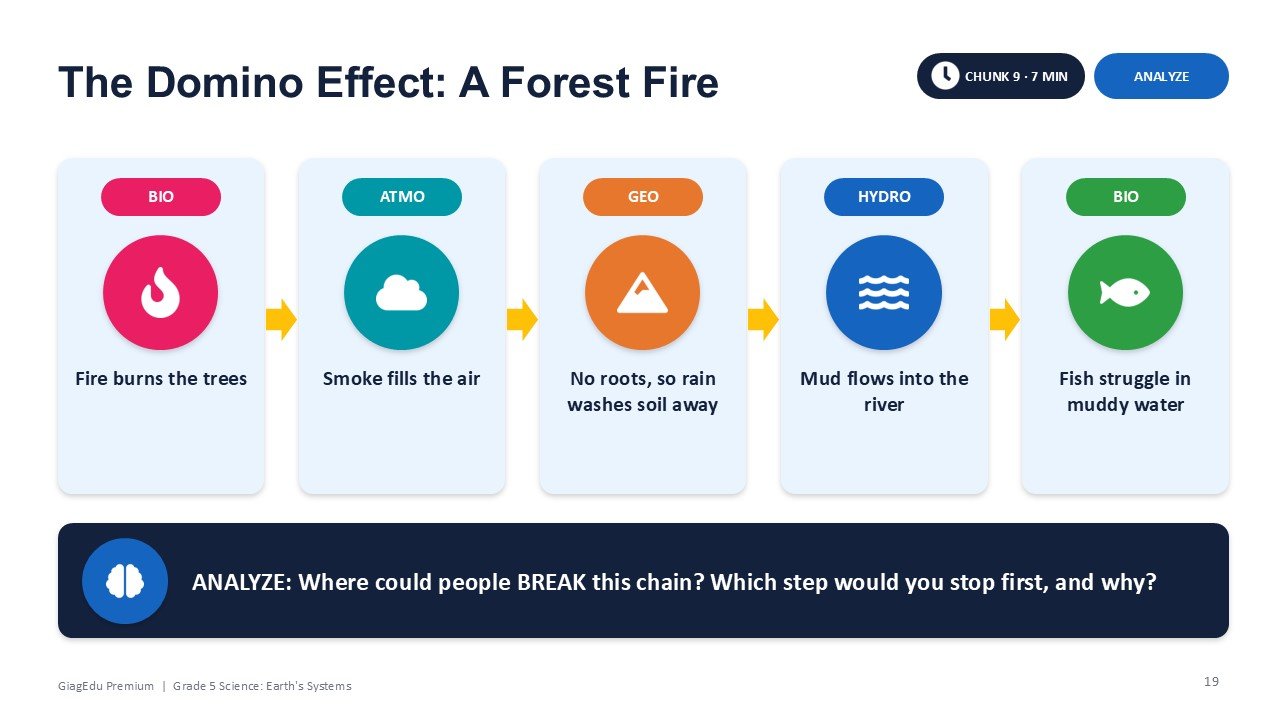
Fire burns the trees (bio) → smoke fills the air (atmo) → with no roots, rain washes soil away (geo) → mud flows into the river (hydro) → fish struggle in the muddy water (bio). Planting new trees quickly can break this chain.
Practise Earth's Systems: 10 questions in study mode, with an explanation after each answer.
Start Practice